In the 2023 editorial "Sugammadex is Not a Silver Bullet," Kopman and Todd provided a compelling analysis of Bowdle’s Sugammadex dose-finding study…
“This work contains a number of findings that deserve attention from our entire profession. Most importantly, it contradicts the widespread belief that simply giving the recommended 2- or 4-mg/kg dose of sugammadex, based solely on an observed twitch count (or post-tetanic count) ensures adequate reversal.”
Evidence that sugammadex without quantitative monitoring is not safe:

In May 2025, I posted a Substack podcast in which Mike Todd and I discussed the topic, “Sugammadex is not a silver bullet”. We talked about several potential issues with sugammadex:
- Many patients require more than the recommended dose (although many require less)
- A small number of patients require unexpected, exceptionally large doses of sugammadex (in excess of 400 mg) or may not be fully reversible despite administration of very large doses
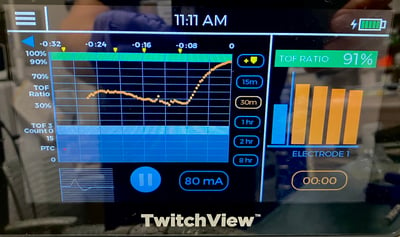
- There is an unknown, but probably small incidence of “recurrent paralysis” in which patients appear adequately reversed to a train-of-four ratio of at least 0.9 but then slide back to a lower train-of-four ratio.
- Kotake et al published a now classic study in 2013 demonstrating that the blind use of sugammadex without quantitative twitch monitoring resulted in residual neuromuscular blockade. In a pragmatic trial, the anesthesia providers administered rocuronium according to their clinical judgment, and then administered “2 mg/kg sugammadex at the conclusion of surgery if bucking against the tracheal tube, spontaneous breathing, or movement of extremities were noted. If these signs were not present, 4 mg/kg sugammadex was administered”. No neuromuscular block monitoring was used. After tracheal extubation, the train-of-four ratio was determined by quantitative monitoring with acceleromyography. The incidence of train-of-four ratio <0.9 was 4.3%, and the incidence of train-of-four ratio <1.0 (a better target for acceleromyography without normalization) was 46%.
- In 2023 we reported a dose-finding study of sugammadex. Eighty-four of 97 patients (87%) required less than the recommended dose, but 13 (13%) required more than the recommended dose. Two patients required additional sugammadex administration for recurrent paralysis.
- There are case reports from adult patients of failure of large doses of sugammadex to produce adequate reversal and reports of recurrent paralysis following reversal with sugammadex—see this previous post. This is also a consideration in pediatric anesthesia.
Interestingly, the package insert for sugammadex refers to patients encountered during the clinical trials executed in support of licensing sugammadex who did not respond to sugammadex as expected—
“In clinical trials, a small number of patients experienced a delayed or minimal response to the administration of BRIDION [sugammadex].”
Despite the fact that sugammadex is not infallible, we know that some anesthesia providers are using sugammadex blindly without quantitative neuromuscular block monitoring (or even without subjective monitoring). I want to briefly summarize some of the evidence showing that this is not good practice.
A review of case reports recurrent paralysis following sugammadex administration to infants made the following recommendations:
- Induction dose limit: for elective surgery, rocuronium induction dose should not exceed 0.5 mg/kg.
- Quantitative neuromuscular monitoring: calibrated quantitative monitoring should be used. Adequate reversal should not be considered until the TOFR ratio is [at least] 0.9.
- PACU monitoring: patients should be kept in the PACU for [at least] 60 min after administration of sugammadex.
- Recurarisation vigilance: Recurarisation should be considered as a potential cause of respiratory distress in the PACU, even after documented reversal of neuromuscular block
- A database study found that when patients were reversed with sugammadex, the risk of respiratory complications from residual neuromuscular blockade were reduced (compared to neostigmine), but these complications could only be abolished by the use of quantitative neuromuscular block monitoring.
- There are also a couple of articles published in open access journals that confirm the results of the studies mentioned above. But various issues in their design and execution would cause me to hesitate to recommend them as reliable sources of evidence.
I am not aware of any evidence supporting that notion that sugammadex should be used without quantitative neuromuscular block monitoring. All of the available evidence is to the contrary.
Note that using a nerve stimulator and subjective twitch counting to determine the dose of sugammadex (based on the recommendation of 2 mg/kg for a train-of-four count of at least 1 or 4 mg/kg for a post tetanic count of at least 1, is also not reliable, since many patients (13% in the study by Bowdle et al) require more than the recommended dose of sugammadex to attain a train-of-four ratio of at least 0.9.
Thus, considerable evidence shows that when sugammadex is used without quantitative neuromuscular block monitoring, residual neuromuscular block remains common—affecting roughly 1 in 10 to 1 in 20 patients.