The Christensen et al. meta-analysis provides the most comprehensive evidence to date that NMBA avoidance in pediatric tracheal intubation significantly increases the risk of difficult and failed intubation, a risk that has not been mitigated by advances in airway technology. Routine NMBA use guided by quantitative monitoring represents the current evidence-based standard of care.
What the Study Found
Christensen et al. conducted a systematic review and meta-analysis of 47 randomized controlled trials encompassing more than 3,000 patients under 18 years of age. The central question: does avoiding neuromuscular blocking agents (NMBAs) during tracheal intubation lead to worse outcomes?
The answer was clear. Avoiding NMBAs resulted in:
- A greater than threefold increase in difficult intubation — 21% without NMBAs vs. 6% with NMBAs (RR 3.47, 95% CI 2.52–4.77)
- Nearly fivefold higher risk of failed intubation (RR 4.70, 95% CI 2.36–9.35)
- 151 additional difficult intubations per 1,000 patients
- 45 additional failed intubations per 1,000 patients
Trial sequential analysis confirmed that these outcomes are unlikely to shift with further study. This work also directly informed the 2025 ESAIC and ESPA guidelines on neuromuscular blockade in anesthetized children.
Why the Trend Toward NMBA Avoidance Developed
Over the past two decades, clinical practice shifted away from routine NMBA use in favor of deeper anesthesia, using propofol-opioid combinations or high-dose remifentanil. This shift was largely driven by concerns about reversibility: if residual neuromuscular blockade couldn't be reliably detected or reversed, avoidance seemed like the safer path.
With the introduction of sugammadex and the advancement of videolaryngoscopy, many assumed that the risks associated with NMBA avoidance would diminish. The data suggest otherwise. A post-hoc analysis stratified by time period showed the risk ratio for difficult intubation with NMBA avoidance was above 3 across all areas. In the most recent trials (2020–2025), it exceeded 6.
Pediatric Patient Safety Using NMBAs
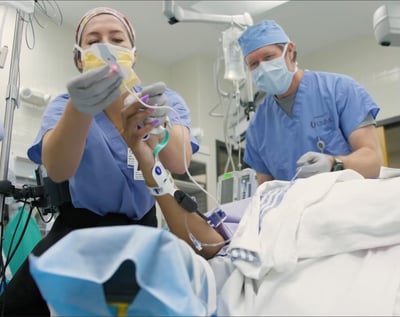
The evidence now supports returning to routine NMBA use to facilitate tracheal intubation in children and infants, across age groups and clinical settings. In pediatric anesthesia, where the stakes are high and the margin for error is narrow, confident recovery and extubation decisions require the use of a quantitative monitor to confirm recovery at TOF ≥ 0.9.
Why should NMBA use be paired with quantitative monitoring?
Pediatric patients have a narrower physiologic margin during airway management. Limited tolerance for repeated intubation attempts mean that first-pass success is not just a quality metric — it's a patient safety priority. Suboptimal intubating conditions in this population carry real consequences.
The Essential Role of Quantitative Neuromuscular Monitoring
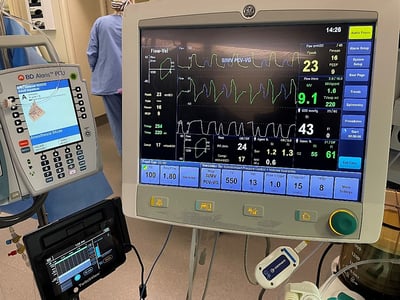
The 2025 ESAIC/ESPA guidelines explicitly call for EMG (electromyography) monitors to guide dosing decisions and confirm adequate recovery before extubation.2
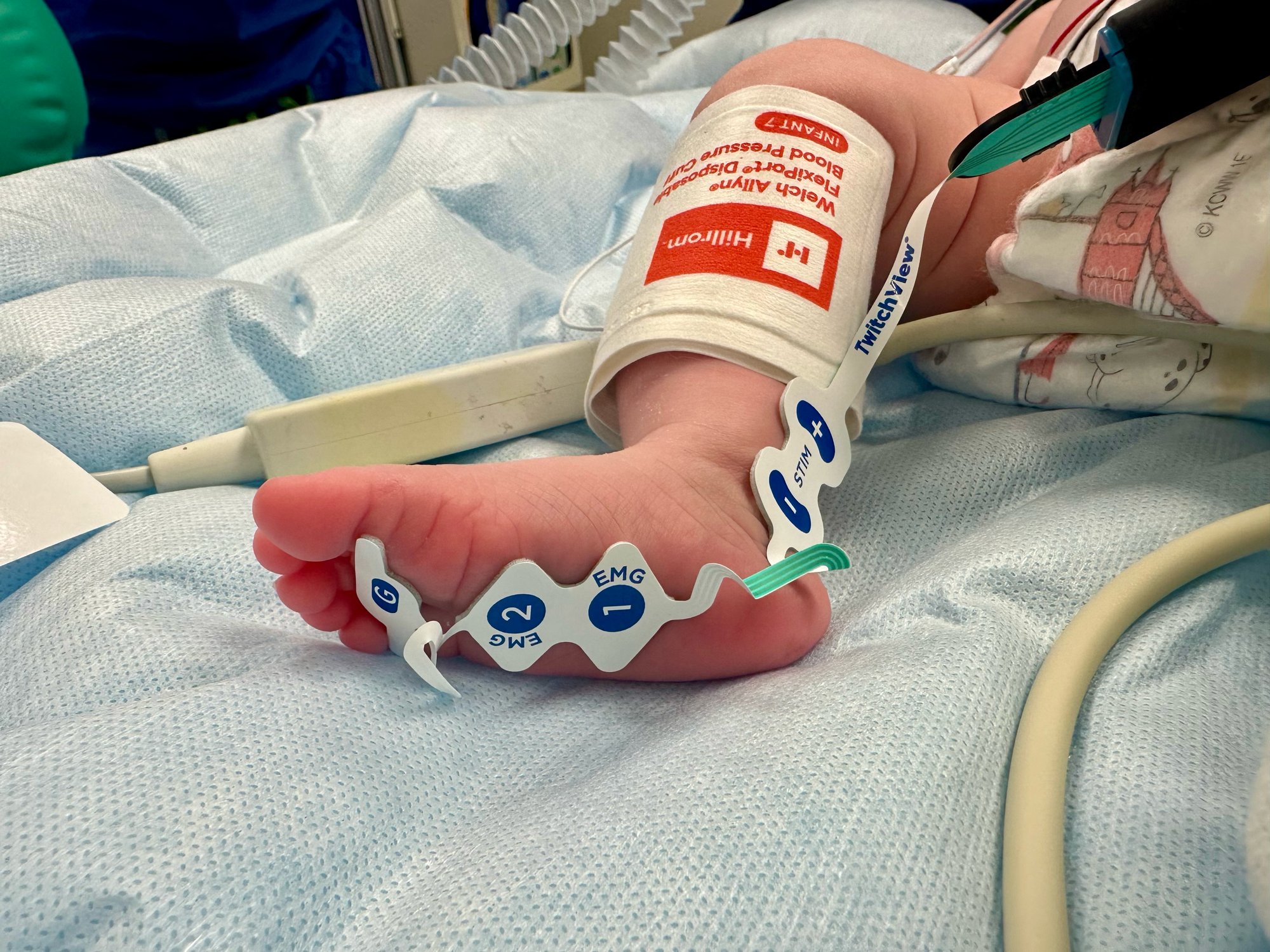
The TwitchView train-of-four monitor is an EMG monitor purpose-built for all patients, including infants and children. TwitchView’s real-time trend plot provides a continuous visual record of the patient’s neuromuscular status—giving clinicians the exact TOF data needed to time sugammadex dosing precisely and confirm TOF ≥ 0.9 before extubation. The trend plot also enables precise titratration of rocuronium, helping clinicians avoid unnecessary dosing in line with the new pediatric guidelines.
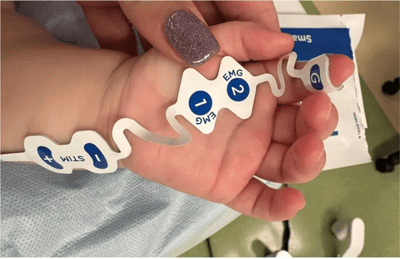
TwitchView offers three electrode sizes—small, medium, and large—each specifically designed for both the adductor pollicis and the flexor hallucis brevis. TwitchView’s purpose-built electrode system makes guideline-approved monitoring accessible to your pediatric patients.
Learn more about TwitchView here: blinkdc.com/products